倚天屠龙记之魔教教主
Record-setting Typhoon Dolphin sweeps northward, triggering alerts across eastern and central China, suspension of traffic_我的网站

A |
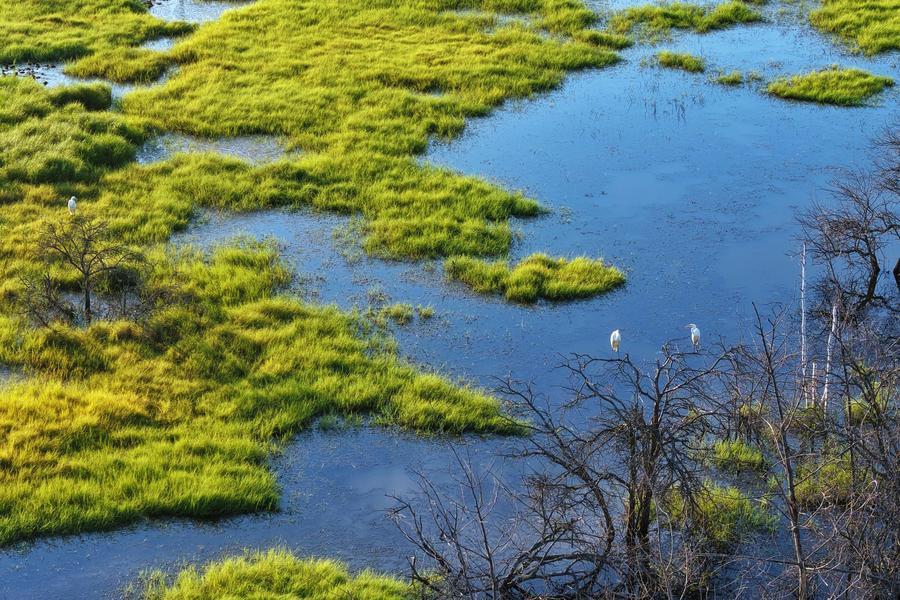
An aerial drone photo taken on Aug. 11, 2026 shows egrets in a wetland of Honghe National Nature Reserve in northeast China's Heilongjiang Province. (Photo: Xinhua)
China took a major step toward green modernization on Saturday as its landmark Ecological and Environmental Code officially came into force, strengthening the legal foundation for a more harmonious coexistence between humanity and nature.
Adopted by China's top legislature in March, the code is China's second formal statutory code after the Civil Code.
The code comprises 1,242 articles in five chapters, covering pollution control, ecological protection, and green and low-carbon development, among other areas.
As China advances its Beautiful China initiative, the code is expected to strengthen rule-of-law guarantees for ecological protection and provide fresh impetus for the country's green and low-carbon transition.
A STRONGER SHIELD FOR NATURE
Now in effect, the Ecological and Environmental Code brings together more than 30 laws, 100 administrative regulations, and 1,000 local laws and regulations through systematic integration, compilation, revision, and refinement, creating stronger legal synergy for ecological protection.
"This is a historic shift in the logic of China's ecological and environmental governance," said Qin Tianbao, a professor at Wuhan University. With the new code, China's ecological protection is moving from fragmented management toward systematic governance, Qin said.
The new code has also been welcomed by local judicial authorities across the country, who say it will have a major impact on their work.
"As the code comes into force, we have clearer guidance and a more focused approach when handling cases related to ecological, environmental and resource protection," said Xu Xufen, a judge at the Intermediate People's Court of Huzhou City in east China's Zhejiang Province.
This is because the code establishes a systematic, comprehensive and clearly structured set of legal values, which provide fundamental guidance for adjudication, Xu said.
China's ecological protection legislation has made continued progress in recent years, forming a wide-ranging, detailed and practical legal framework. However, analysts note that some obstacles remain, including fragmentation among different laws and regulations.
The code can help resolve legal conflicts and fill gaps, making the country's ecological and environmental legal system more integrated and coordinated, and better able to keep pace with the times, said Yu Wenxuan, a professor at the China University of Political Science and Law.
The strengthened legal framework comes alongside years of efforts that have produced key environmental gains. Some innovative explorations include the river, lake and forest chief systems, as well as central environmental protection inspections, which have all been included into the code.
Such efforts have led to major changes in China's ecological protection, with key indicators continuing to improve. In 2025, the average PM2.5 concentration in major Chinese cities fell to 28 micrograms per cubic meter, while the proportion of days with good air quality reached 89.3 percent, both the best levels since monitoring began. China has become one of the countries with the fastest improvement in air quality in the world.
By the end of 2025, China's national forest coverage rate had exceeded 25 percent. Since the beginning of this century, about one quarter of the world's newly afforested areas have come from China. The country has recorded the world's largest and fastest growth in forest resources.
Looking ahead, China has mapped out the next stage of its ecological protection drive. In July, the State Council issued a plan for building a Beautiful China during the 15th Five-Year Plan period (2026-2030), setting out the overall requirements, targets, key tasks and major projects for comprehensively advancing the initiative.
According to the plan, by 2030, China will achieve an overall improvement in ecological and environmental quality and make significant progress toward building a Beautiful China, with green production and lifestyles largely established and the carbon peaking target reached on schedule.
CHARTING A GREENER FUTURE
By dedicating a chapter to green and low-carbon development, the code helps bring environmental protection and economic development into closer alignment -- two goals often seen as being in tension, said Hou Jiaru, a professor at the China University of Political Science and Law.
"It combines the philosophy of development through protection and protection through development," Hou said.
In practice, China has made solid progress in advancing green development in recent years. The country has cultivated more than 8,000 national-level green factories, built the world's largest clean power supply system and largest clean steel production system, and established the world's largest carbon emissions trading market.
Echoing the spirit of the new code, China's outline of its 15th Five-Year Plan (2026-2030) prioritizes accelerating the comprehensive green transition of economic and social development, calling for faster progress in shaping green modes of production and day-to-day life.
China has also sought to share its green development experience with the world, contributing Chinese solutions to global ecological protection and sustainable development.
In Egypt, for example, a water-saving terraced farming model introduced from China has been replicated, helping conserve water and support agriculture in the mountainous areas of the Sinai Peninsula. In Saudi Arabia, China's photovoltaic technology is helping the Middle Eastern country harness desert sunshine for solar power, offering a practical path toward clean energy transition.
As the code takes effect, China's green modernization drive is gaining not only a stronger legal foundation at home, but also broader relevance for global sustainable development in an era when fragmented legislation is increasingly inadequate for addressing complex environmental challenges.
To this end, the code includes specific provisions on international cooperation, calling on China to strengthen collaboration on ecological and environmental protection, fulfill its obligations under international treaties it has concluded or joined, and promote cooperation in addressing climate change.
Analysts say that the code marks a significant transition for China in global environmental governance, from participant to leader, while offering a legislative model for the world, especially developing countries.
In particular, the code's integrated approach to pollution prevention, ecological protection and green, low-carbon development -- all key issues on the global agenda, represents an important technical contribution to global legislative practice, said Qin.
"The code sends a clear signal to the international community: China is firmly advancing ecological priority and green development in accordance with the rule of law, and is willing to work with countries around the world to build a clean and beautiful world," he added.
。
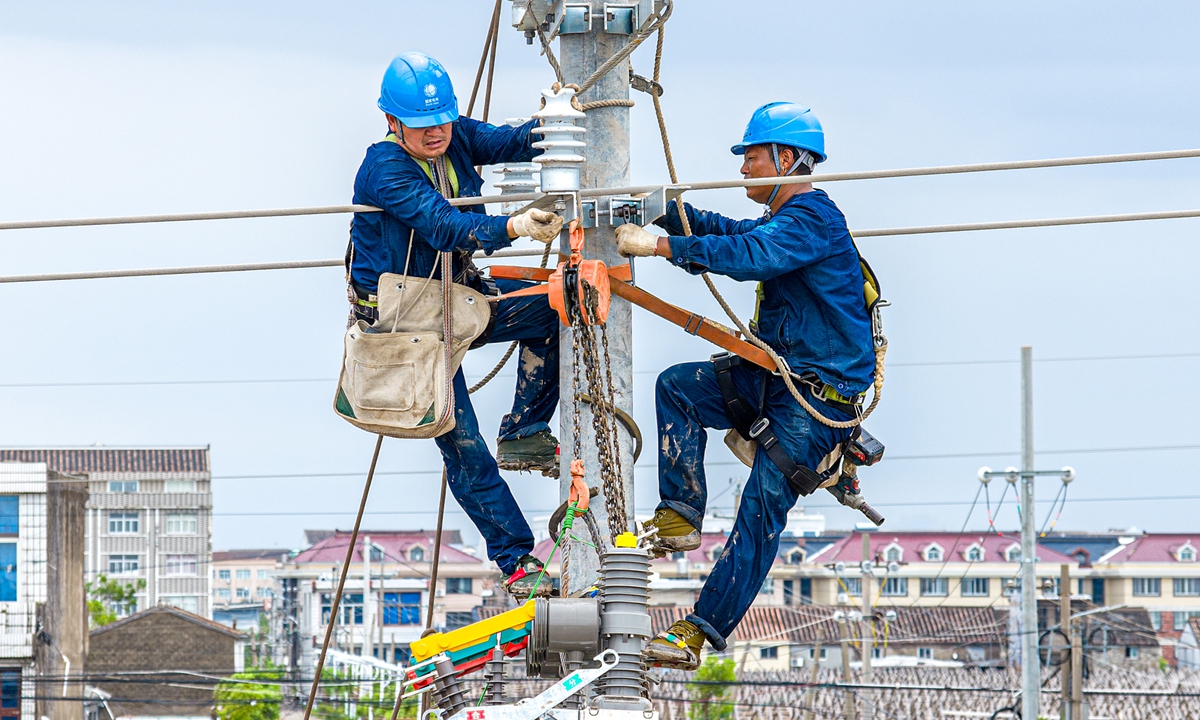
Emergency repair workers from the State Grid city power supply company replace porcelain insulators in Wenling, East China's Zhejiang Province on August 10, 2026, to ensure the supply of power after Typhoon Dolphin made landfall. Photo: VCG
After Typhoon Dolphin, one of the most powerful tropical cyclones to hit China this year, made landfall twice in East China's Zhejiang Province on Sunday, bringing torrential rain and strong winds, it weakened into a tropical storm by Monday morning before moving inland.
The typhoon traveled more than 6,000 kilometers before landfall, lasted more than three times as long as a typical typhoon and set a record as the eastern-most typhoon to make landfall in China. It is expected to continue moving northwestward with its extensive cloud system covering much of East China, bringing strong winds and heavy rain to more than a dozen provinces and regions. Extreme rainfall is expected not only near the landfall spot but also along its northward path, chinanews.com reported on Monday.
Affected by Typhoon Dolphin, ferry services along the Yangtze River have been suspended, and traffic restrictions have been imposed along the entire Nanjing section of the river. All 64 ferry services have been suspended, with crews reinforcing mooring lines and maritime authorities deploying additional personnel on standby.
Traffic controls are in effect along the entire Nanjing section of the Yangtze River, with all vessel operations suspended. More than 1,000 vessels and over 7,000 crew members are sheltering, while emergency boats remain on standby for possible incidents. More than 100 high-speed trains at Nanjing South Railway Station have been suspended, while Metro Line S9 is also out of service. Traffic and urban management crews are working to drain accumulated water. Nanjing has also closed outdoor and water-based entertainment facilities at all rated tourist sites and suspended outdoor cultural and tourism activities amid the typhoon.
The Ministry of Finance and the Ministry of Emergency Management urgently allocated 180 million yuan ($26.74 million) in central government disaster relief funds on Monday. Of this amount, 120 million yuan was allocated to support Jiangsu, Zhejiang, Anhui, Fujian and Jiangxi in carrying out emergency flood and typhoon response and disaster relief efforts. The funds will support search and rescue,the relocation of affected residents, emergency measures to eliminate risks and hazards, the investigation and treatment of potential secondary disaster hazards, and repair to damaged homes.
The National Development and Reform Commission urgently allocated 200 million yuan to support Zhejiang in post-typhoon emergency restoration and recovery, focusing on damaged infrastructure like roads and water conservancy, as well as public services such as schools and hospitals, per CCTV News.
Several government departments also jointly activated a Level IV national disaster relief emergency response on Monday after Typhoon Dolphin severely affected Zhejiang. A disaster relief team was sent to the province to assess damage and assist with evacuations, relief efforts and basic necessities, according to CCTV.
Ma Jun, director of the Institute of Public and Environmental Affairs, told the Global Times that as the typhoon moves farther inland and northward, a much broader area in northern China also needs to prepare for heavy rainfall as the typhoon is carrying a significant amount of moisture and is capable of producing intense precipitation.
The typhoon's impacts will extend into central China, with Henan and Shandong potentially seeing significant effects. Later, the storm could even affect the Beijing-Tianjin-Hebei region, Ma said.
According to the National Meteorological Center (NMC), persistent heavy rainfall is expected across regions including Hubei, Henan and Hebei with torrential rain possible in some areas over the next three days. After Thursday, as the typhoon's remnants move northward and interact with cold air, significant rainfall is expected to continue in Beijing, Tianjin, Hebei and Liaoning, chinanews.com reported on Monday.
A Level IV flood-control emergency response has been activated on Monday for Hubei and Shandong, Hebei and Henan provinces due to prospects of typhoon impacts, CCTV reported.
The Ministry of Emergency Management urged affected regions to strengthen geological disaster prevention, clarify responsibilities, enhance interagency coordination and information sharing, and closely monitor rainfall, flooding and geological hazards, according to Xinhua.
Beijing also issued multiple orange alerts for heavy rain, flash flood hazards and urban flooding on Monday. Several districts subsequently issued red alerts for torrential rain. Beijing plans to activate a Level II flood-control emergency response across the city on Tuesday morning, CCTV reported.
。
Current article:http://lhlm3m.choumaimuwogenkuzhainuan.bond/jps/tztpdlp.html
Published on:11:54:13